
When “Amen” Becomes Agreement
A note on Geoff Stroud’s comment under Keith Radcliffe’s “Your Choices Matter”

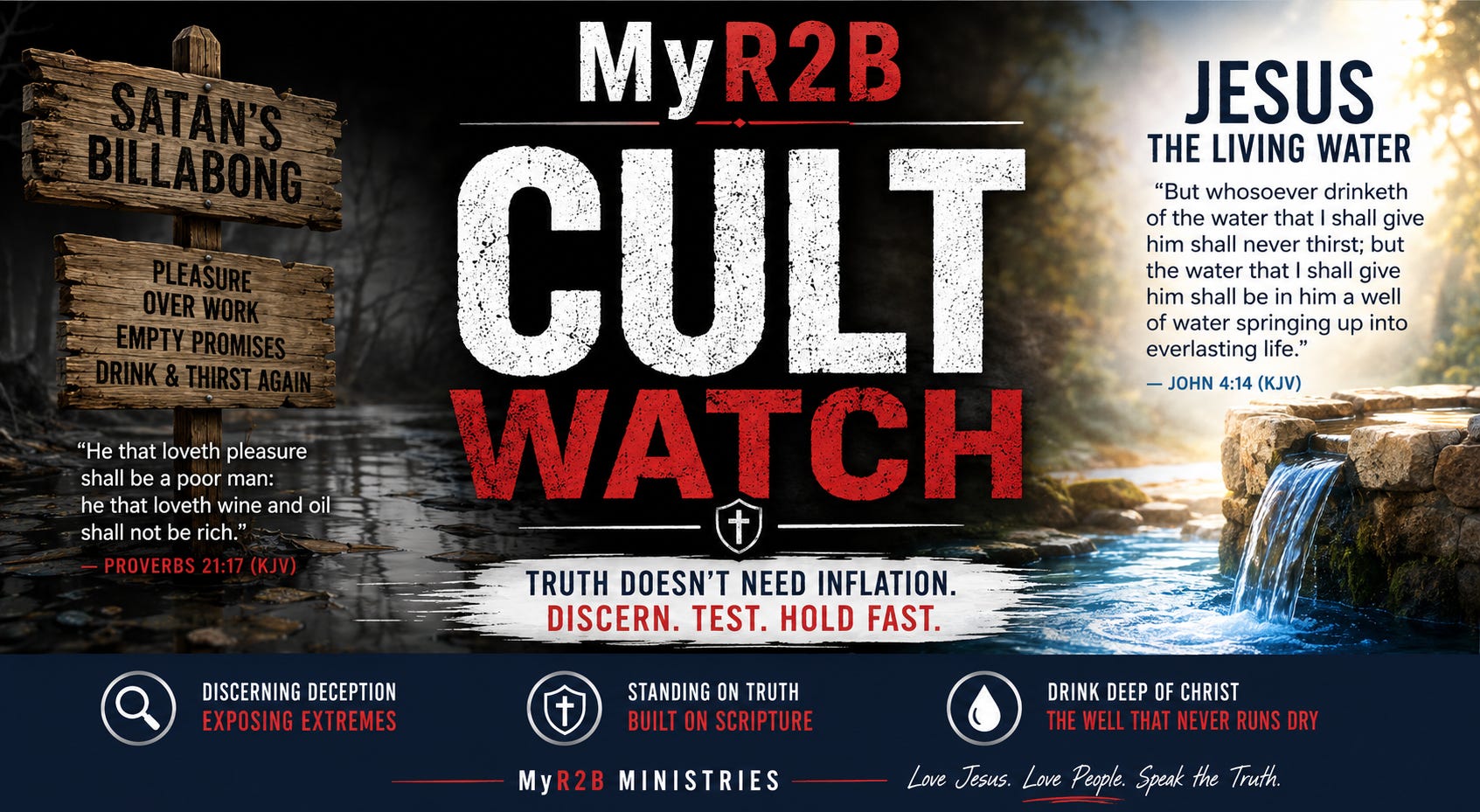
Keith Radcliffe published a piece on welfare, work, and personal responsibility. One verse anchors the whole thing at the end:
Proverbs 21:17 (KJV): “He that loveth pleasure shall be a poor man: he that loveth wine and oil shall not be rich.”
That verse is true. It says what it says. A man who chases pleasure over work will end up poor. Solomon wrote that three thousand years ago and it still holds. Nobody’s arguing with Proverbs 21:17.
The trouble isn’t the verse. The trouble is what got hung on it. Radcliffe uses one proverb about personal financial prudence to carry an argument about government policy, foreign aid, and who owes what to whom. Proverbs 21:17 doesn’t say a word about any of that. It’s a wisdom saying about a man and his own choices, not a position paper on national budgets. When you load a single proverb up with weight it was never built to carry, the citation stops doing the work of Scripture and starts doing the work of decoration. It’s true. It’s just not proving what it’s being used to prove.
That’s Radcliffe’s piece. Now here’s why it landed in front of me at all.
Geoff Stroud showed up in the comments. He didn’t just like the post. He wrote this:
“This applies to ALL Western countries. Mankind drinks from the billabong of Satan, when only the life-giving, purified waters of Jesus can change us.”
Read that again. A political essay about welfare policy just got turned into a statement about all of Western civilization drinking from Satan, with Jesus as the only alternative. That’s not commentary. That’s a totalizing spiritual claim, stapled onto a policy argument that never asked for one.
I’ve watched this move before in Stroud’s own writing. Take a specific, limited thing. A verse. A political opinion. A moment. And stretch it until it covers everything, until it becomes cosmic, until agreeing with the specific thing means you’re on the side of Jesus and disagreeing means you’re drinking from Satan’s stagnant water. It’s the same reach I’ve documented in his Genesis commentary, where absolute conclusions get built on a citation that can’t hold that much weight. Here it just happened in a comment box instead of an article, on a subject that has nothing to do with Genesis at all.
That matters. Because it shows the pattern isn’t limited to Bible teaching. It’s how Stroud reads the world. Any subject, any post, any comment section becomes an occasion to declare a binary. Jesus’s water or Satan’s billabong. Nothing in between. No room for a Christian to read Radcliffe’s piece and think “some of this is true, some of this overreaches” the way I just walked through above. Stroud doesn’t leave that room. He never does.
John gives us a real word for water that actually changes a person:
John 4:14 (KJV): “But whosoever drinketh of the water that I shall give him shall never thirst; but the water that I shall give him shall be in him a well of water springing up into everlasting life.”
That’s the real contrast Jesus draws. Not “the West versus Jesus.” Not “policy positions I agree with versus Satan’s billabong.” Jesus draws the line between the water that leaves you thirsty and the water that doesn’t. He draws it in a conversation with one woman at a well, specific and personal, not with a sweeping verdict on continents.
Here’s what I want you to see. Truth doesn’t need to be inflated to be true. Proverbs 21:17 didn’t need Stroud’s comment to make it powerful. It already was powerful, sitting right there, saying exactly what it says. The moment somebody feels the need to turn a true thing into an absolute cosmic thing, that’s worth slowing down on. Not because the small thing was wrong. Because the inflation is doing work the truth never asked it to do.
I love Jesus enough to want people drinking from what He actually offers, not from a summary of Him wrapped around whatever the subject of the day happens to be. He’s not a rhetorical flourish. He’s not a mic drop at the end of a political comment. He’s the well that doesn’t run dry, and He doesn’t need help sounding bigger than He is.
I love you enough to tell you that straight.
Matthew Adams, MyR2B Ministries Cult Watch
Thank you for your comments on my essay.
Quote from your comments:
"The trouble isn’t the verse. The trouble is what got hung on it. Radcliffe uses one proverb about personal financial prudence to carry an argument about government policy, foreign aid, and who owes what to whom."
The title of the essay is "Your Choices Matter". That is what the essay is about - Your Choices. The example of choices happened to be about "forced wealth transfer". Other examples could have been used. This example was used as it has an extensive history that many of us have lived through. In the 1960's many people disagreed with the "war on poverty" and were very vocal about it. Yet, as time went on, what was regarded as evil became regarded as good, even necessary! How did this happen? It happened one choice at a time. People stopped thinking about the ethics and morality of these choices and stopped observing the spiritual and physical consequences. This essay is about choices.
If a people decide that it is right to transfer wealth from those who have, to those who don't have, then they have accepted as moral and ethical what we see today - we just shift the populations involved. The citizens who were once regarded as poor are now regarded as wealthy in comparison with the foreign population who have much less. The transfer of wealth continues, and the former recipients strongly object. They forget the choices they made.
The verse that was quoted, Proverbs 21:17 was preceded by a paragraph. The quote refers back to that paragraph.
Although it may appear that "someone else" will obstruct and absorb the consequences of poor life choices, the truth of matter is stated in Proverbs 21:17. This verse destroys the illusion that people have chosen. Can government policies of wealth transfer eliminate poverty or make someone rich? No! Think about the spiritual, moral, ethical choices that you make!
This is NOT a "political essay about welfare policy", it is about spiritual, moral, and ethical choices, it is about thinking.
So, what "applies to ALL Western countries"? The personal choices!